10,000 BC – present
Major Historical Events (Global Overview)
A condensed global timeline from 10,000 BC to the present. It doesn’t try to list every event, but it hits many of the big civilizational turning points so you can see the arc of history at a glance, then jump from here into technology timelines and future scenarios.
Major Historical Events: 10,000 BC – Present
Dates are approximate, especially for ancient and prehistoric eras. This is a world-level view, so many important regional stories are necessarily compressed.
10,000 – 3,000 BC · Neolithic & Early Civilizations
From foragers to farmers, villages, and the first cities
- c. 10,000 BC – End of the last Ice Age; climate stabilizes into the Holocene, enabling more reliable agriculture.
- c. 10,000–8,000 BC – Neolithic Revolution in the Fertile Crescent: domestication of wheat, barley, sheep, goats, and cattle; permanent villages appear.
- c. 9,500–7,500 BC – Early ritual and settlement sites such as Göbekli Tepe and Çatalhöyük in Anatolia show complex pre-urban societies.
- c. 8,000–5,000 BC – Agriculture and pottery spread to Europe, the Nile Valley, the Indus region, and parts of China; rice cultivation begins in East Asia.
- c. 5,000–4,000 BC – First large riverine settlements along the Tigris–Euphrates, Nile, and Indus; emergence of proto-writing and administrative tokens.
- c. 3,500–3,000 BC – First true cities and states in Mesopotamia (Uruk, Ur); early dynastic Egypt coalesces along the Nile; wheeled vehicles and bronze metallurgy appear.
3,000 – 1,200 BC · Bronze Age Civilizations
Great river empires and long-distance trade networks
- c. 3,100 BC – Unification of Upper and Lower Egypt; beginning of the dynastic Egyptian kingdom and construction of monumental tombs and temples.
- c. 2,900–2,000 BC – Sumerian city-states, then the Akkadian Empire, develop cuneiform writing, law codes, and early imperial administration.
- c. 2,600–2,400 BC – Old Kingdom Egypt builds the great pyramids at Giza; centralized pharaonic state reaches its peak.
- c. 2,600–1,900 BC – Mature Harappan/Indus Valley Civilization flourishes with planned cities (Mohenjo-daro, Harappa) and extensive trade.
- c. 1,800–1,200 BC – Babylonian, Hittite, and later Assyrian powers dominate parts of Mesopotamia and Anatolia; famous legal codes (e.g., Code of Hammurabi).
- c. 1,700–1,200 BC – Shang dynasty in China; oracle bone script, bronze ritual culture, and early Chinese state formation.
- c. 1,500–1,200 BC – New Kingdom Egypt expands into the Levant and Nubia; Mycenaean civilization rises in Greece; long-distance trade spans the Eastern Mediterranean.

Sumer and the earliest civilizations

Indus Valley Civilization

Shang Dynasty China

Hittite Kingdom

Late Bronze Age Collapse & Sea Peoples
1,200 – 500 BC · Iron Age & Axial Age
Empires, philosophies, and religious traditions
- c. 1,200 BC – Widespread Bronze Age collapse around the Eastern Mediterranean; many palace-centered societies fall, likely due to a mix of invasions, climate stress, and internal crises.
- c. 1,100–800 BC – Phoenician city-states develop maritime trade across the Mediterranean; spread of alphabetic writing.
- c. 1,050–930 BC – Monarchies of Israel and Judah in the Levant; early Hebrew religious texts and traditions evolve.
- c. 800–500 BC – “Axial Age”: major philosophical and religious traditions emerge in multiple regions (Greek philosophy, Hebrew prophets, Zoroastrianism in Persia, Hindu and Buddhist traditions in India, Confucianism and Daoism in China).
- c. 776 BC – Traditional date for the first Olympic Games in Greece, reflecting growing Hellenic cultural identity.
- c. 750–500 BC – Greek city-states (poleis) expand and colonize the Mediterranean and Black Sea coasts; early democratic experiments in Athens.
- c. 700–500 BC – Neo-Assyrian and Neo-Babylonian empires dominate Mesopotamia and the Near East; later replaced by the Persian (Achaemenid) Empire under Cyrus and successors.
- c. 600–500 BC – Development of major city-states and kingdoms in India’s Ganges plain; early Buddhist and Jain communities form.

Kingdom of Israel

Kingdom of Judah

Achaemenid Persian Empire
500 BC – 500 AD · Classical Empires & World Religions
Persia, Greece, Rome, India, and China in an interconnected classical age
- 5th century BC – Greco-Persian Wars; Greek victories preserve independent city-states and stimulate Athenian democracy and culture.
- 4th century BC – Alexander the Great’s conquests create a vast, short-lived empire and spread Hellenistic culture from Greece to Egypt and India.
- 3rd century BC – Mauryan Empire in India (Ashoka); promotion of Buddhism and early pan-Indian political unification.
- 3rd–2nd centuries BC – Qin and Han dynasties unify China; creation of a centralized imperial bureaucracy, standardized script, and major public works (early Great Wall segments).
- 1st century BC – Roman Republic transforms into the Roman Empire under Augustus; expansion across the Mediterranean, Western Europe, and the Near East.
- c. 4 BC – 30 AD – Life and teachings of Jesus in Roman Judea; early Christian communities begin to form.
- 3rd–4th centuries AD – Christianity spreads across the Roman Empire; Emperor Constantine legalizes it, and it later becomes the state religion.
- 4th–5th centuries AD – Internal crises and invasions weaken Western Rome; 476 AD commonly cited as the fall of the Western Roman Empire. Eastern Roman (Byzantine) Empire continues.

Alexander the Great’s Empire

Roman Empire at its height

Trade routes of the Classical world
500 – 1,000 AD · Early Medieval & Post-Classical World
Byzantium, Islam, early European kingdoms, and Asian powers
- 6th century – Justinian’s reign in Byzantium; codification of Roman law (Corpus Juris Civilis) and reconquest attempts in the Mediterranean.
- 7th century – Rise of Islam in Arabia; rapid expansion of the Rashidun and Umayyad Caliphates across the Middle East, North Africa, and Iberia.
- 8th–9th centuries – Carolingian Empire in Western Europe (Charlemagne); brief unification followed by fragmentation into feudal kingdoms.
- 8th–11th centuries – Viking expansion and raids across Europe; settlement in Iceland, Greenland, and short-lived presence in North America.
- Tang (7th–10th centuries) and Song (10th onward) dynasties in China: major advances in printing, gunpowder, commerce, and urbanization.
- Development of early Japanese state and culture; Nara and Heian periods bring centralized government and classical Japanese literature.

Migration Period & early medieval kingdoms

Expansion of Islam (7th–10th centuries)

Hasmonean Kingdom
1,000 – 1,500 AD · High Medieval & Late Medieval
Crusades, Mongol Empire, and growing global connections
- 11th–13th centuries – The Crusades reshape relations between Western Europe, Byzantium, and the Islamic world; Italian city-states prosper through Mediterranean trade.
- 13th century – Mongol Empire under Genghis Khan and successors becomes the largest contiguous land empire in history, linking East Asia, Central Asia, the Middle East, and Eastern Europe.
- 13th–14th centuries – Pax Mongolica facilitates long-distance trade and travel (e.g., journeys of Marco Polo); ideas, goods, and diseases move across Eurasia.
- 14th century – The Black Death devastates Europe, the Middle East, and parts of Asia, killing a large share of the population and destabilizing existing social orders.
- 15th century – Rise of powerful European monarchies (Spain, Portugal, France, England); Ottoman Empire captures Constantinople (1453) and becomes a major regional power.
- c. 1450–1500 – Printing press in Europe (Gutenberg) accelerates literacy, religious debate, and scientific exchange.
- 1492 – Columbus’s voyage links Europe and the Americas, initiating an era of European colonization and global Colombian exchange of crops, animals, and diseases.

Crusader States in the Levant

Mongol Empire

Maya Civilization
1,500 – 1,789 · Early Modern Era
Age of Exploration, Reformation, and early global empires
- 16th century – Spanish and Portuguese empires expand across the Americas, Africa, and Asia; silver from the Americas reshapes global trade.
- 1517 onward – Protestant Reformation fractures Western Christianity; religious wars and state-building efforts reshape Europe.
- 16th–17th centuries – Ottoman, Safavid, and Mughal empires dominate large parts of the Islamic world and South Asia.
- 17th century – Dutch and English trading empires rise; joint-stock companies like the Dutch and English East India Companies pioneer corporate imperialism.
- Scientific Revolution (16th–17th centuries) – Advances in astronomy, physics, and mathematics (Copernicus, Galileo, Newton) transform understandings of nature.
- 18th century – Enlightenment ideas challenge traditional authority; growing emphasis on rights, reason, and constitutional government.
- 1776 – American Revolution establishes the United States and introduces a republican model that influences later revolutions.
- 1789 – French Revolution begins; monarchy overthrown, rights declarations issued, and Europe enters a period of ideological and military upheaval.

Inca Empire
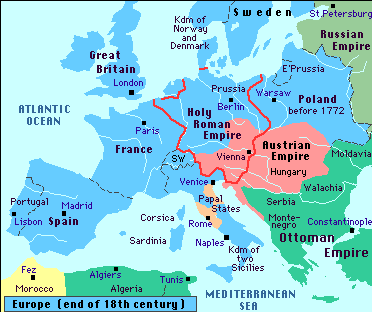
Europe at the end of the 18th century

India c. 1795
1,789 – 1,914 · Age of Revolutions & Industrialization
Nation-states, industry, and global imperial competition
- 1790s–1815 – French Revolutionary and Napoleonic Wars reshape Europe; spread of nationalism and legal reforms, followed by conservative restoration.
- 19th century – Industrial Revolution transforms Britain, then Western Europe, North America, and Japan: steam power, factories, railways, telegraphs, and urbanization.
- Early–mid 19th century – Latin American wars of independence break up the Spanish and Portuguese colonial empires in the Americas.
- Mid–late 19th century – Unification of Italy and Germany alters the European balance of power; United States expands westward.
- “New Imperialism” – European powers, the U.S., and Japan compete for colonies in Africa and Asia; Scramble for Africa divides the continent among European states.
- Meiji Restoration in Japan (1868) – Rapid modernization and industrialization; Japan becomes an imperial power.
- Late 19th–early 20th centuries – Global migration, mass politics, labor movements, and technological change accelerate; underlying tensions build toward a major conflict.

American Civil War (1861–1865)
1,914 – 1,945 · World Wars & Global Crisis
Two world wars, revolutions, and the collapse of old empires
- 1914–1918 – World War I devastates Europe; empires (Russian, Austro-Hungarian, Ottoman, German) collapse; Treaty of Versailles imposes harsh terms on Germany.
- 1917 – Russian Revolution brings the Bolsheviks to power; world’s first long-lasting communist state forms as the Soviet Union.
- Interwar period – Economic instability, Great Depression, and the rise of fascism and militarism in Germany, Italy, and Japan.
- 1939–1945 – World War II: Axis powers (Germany, Italy, Japan) fight Allies (UK, USSR, U.S., China, others). Holocaust and other mass atrocities occur.
- 1945 – Atomic bombings of Hiroshima and Nagasaki; Japan surrenders; United Nations founded to promote international cooperation and prevent future wars.

World War I

World War II – global

World War II – Europe (1942–45)
1,945 – 1,991 · Cold War & Decolonization
U.S.–Soviet rivalry, nuclear age, and end of colonial empires
- Late 1940s – Cold War begins between the U.S.-led Western bloc and the Soviet-led Eastern bloc; Germany and Europe are divided.
- 1949 – NATO formed; People’s Republic of China established after Chinese Civil War.
- 1950–1953 – Korean War solidifies division of the Korean Peninsula.
- 1950s–1970s – Wave of decolonization across Asia, Africa, and the Middle East; dozens of new states gain independence.
- 1962 – Cuban Missile Crisis brings the world close to nuclear war, leading to new arms-control efforts.
- Vietnam War (1950s–1975) – Major conflict and symbol of Cold War proxy wars; U.S. withdrawal and unification under a communist government.
- 1960s–1980s – Civil rights movements, second-wave feminism, and social transformations across many societies.
- 1980s – Economic reforms in China; USSR faces stagnation and reform attempts under Gorbachev (perestroika, glasnost).
- 1989–1991 – Collapse of communist regimes in Eastern Europe; fall of the Berlin Wall; dissolution of the Soviet Union; Cold War ends.
1,991 – 2,008 · Post–Cold War & Globalization
Unipolar moment, digital revolution, and shifting power
- 1990s – U.S. emerges as primary global power; market-oriented reforms expand; regional conflicts persist (Balkans, Rwanda, Gulf War).
- Rise of the European Union as a deeper political and economic union; expansion into Central and Eastern Europe.
- Information technology and internet revolution: personal computers, mobile phones, and early web reshape communication and business.
- 2001 – September 11 attacks in the U.S.; War in Afghanistan and later Iraq reshape global security debates.
- Early 2000s – Rapid growth in China and other emerging economies accelerates a shift in global economic weight toward Asia.
2,008 – Present · Multipolar, Digital, and Climate Age
Financial crisis, rising powers, and global interconnected risks
- 2008 – Global financial crisis exposes vulnerabilities in the international financial system; long-term impacts on inequality and politics.
- 2010s – Social media and smartphones become ubiquitous; new forms of political mobilization, misinformation, and surveillance emerge.
- Arab Spring uprisings (2010–2012) challenge authoritarian regimes in the Middle East and North Africa, with mixed and often tragic outcomes.
- Growing strategic competition between the U.S. and China; debates about a “new Cold War” and the future of global order.
- Accelerating climate change impacts: more frequent extreme weather, wildfires, and rising concern about long-term planetary stability.
- 2020–2022 – COVID-19 pandemic causes global health crisis, economic disruption, and further shifts toward remote work and digital infrastructure.
- Ongoing – Conflicts and tensions in Ukraine, the Middle East, Indo-Pacific, and other regions highlight the fragility of global governance.
- Current era – Rapid advances in AI, biotechnology, and energy systems raise new possibilities and new risks; debates intensify about regulation, ethics, and the shape of future civilization.

South Ossetia War (2008)
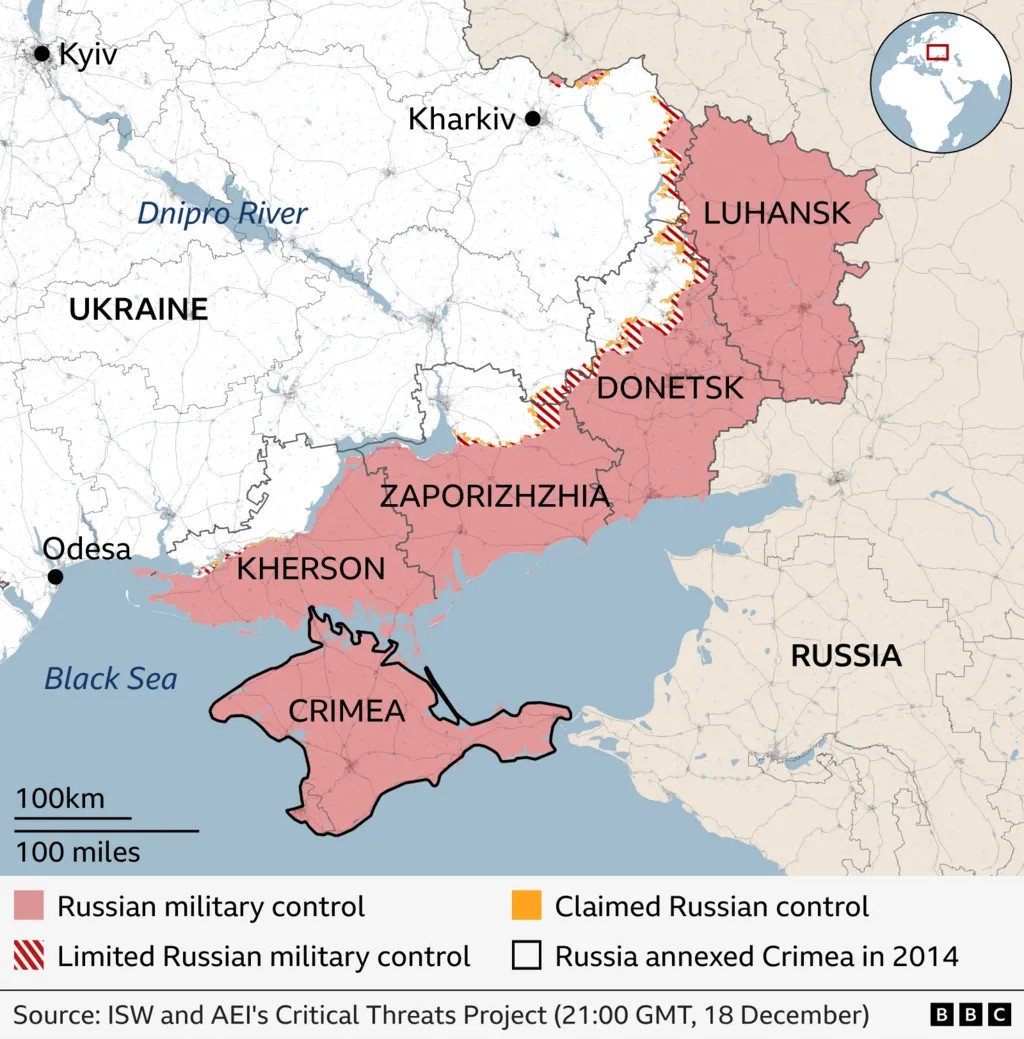
Russo–Ukraine War (2014–present)